Athens is an extraordinary city, but the surrounding region of Attica and the Peloponnese holds some of Greece's most significant historical sites and natural wonders—many reachable within an hour or two by car, bus, or organised tour. Whether you're drawn to ancient ruins, Byzantine monasteries, or coastal villages, the day trips from Athens rival the capital itself and are easily combined into a flexible itinerary.
Ancient Corinth and the Peloponnese
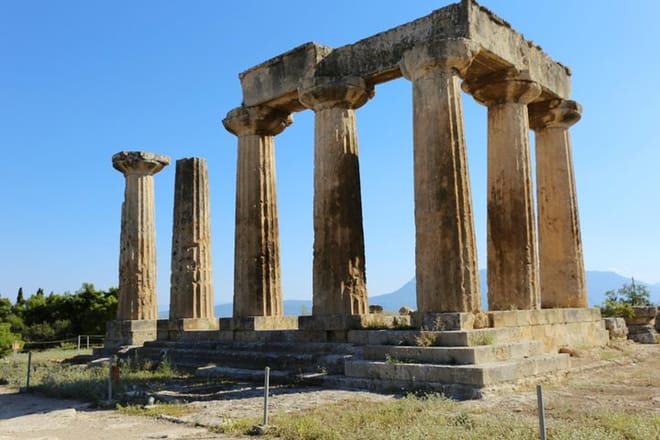
Ancient Corinth, located approximately 65 km southwest of Athens (about 1 hour by car), is one of Greece's most underrated archaeological sites. While often overshadowed by Athens, Corinth was once a powerful city-state and trading hub. The iconic Temple of Apollo, with its seven remaining Doric columns, dominates the site and offers a tangible sense of Greco-Roman grandeur without the crowds of central Athens.
The site spans both the Ancient Greek city and the Roman settlement, providing layers of history. The Archaeological Museum on-site houses impressive mosaics, pottery, and sculptures. Budget 3–4 hours for a thorough visit. Nearby, the dramatic Corinth Canal—a 19th-century engineering marvel connecting the Corinthian and Saronic gulfs—is worth a brief stop for photos.
About 30 km further south from Corinth lies Mycenae, the legendary citadel of Agamemnon and the heart of Bronze Age Greece. The site is instantly recognisable by its monumental Lion Gate—the oldest known monumental sculpture in Europe—and the fortress walls that tower above the plain of Argos.
Walking through Mycenae transports you back 3,400 years. The Treasury of Atreus, a beehive tomb carved into the hillside, is an engineering marvel. The palace remains, royal tombs, and defensive structures tell the story of a civilisation that rivalled anything in the ancient world. Allow 2–3 hours here. The Treasury of Atreus is particularly atmospheric in late afternoon when light filters through the entrance.
Mycenae pairs perfectly with nearby Epidaurus, home to the remarkably well-preserved ancient theatre.
Epidaurus: Theatre and Healing
Epidaurus, about 35 km from Mycenae, is home to one of antiquity's greatest achievements: a theatre of such precise acoustics that a whisper from the stage can be heard in the back row. Built in the 4th century BCE, the Epidaurus Theatre is still used for performances during summer months—attending an ancient Greek play here is a transcendent experience if your dates align.
Beyond the theatre, Epidaurus was an ancient healing sanctuary dedicated to Asclepius, the god of medicine. Temple remains, a stadium, and museums illustrate how pilgrims travelled from across Greece seeking cures. The site feels less commercialised than Athens' major attractions, offering peaceful exploration. Plan 2–3 hours.
Nafplio: Venetian Charm and Coastal Beauty
Perched on the Argolic Gulf about 50 km from Epidaurus, Nafplio is Greece's most elegant small town and the country's first capital after independence. Wandering the narrow cobbled streets of the old town reveals neoclassical mansions, hidden squares, tavernas, and the remarkable Palamidi Fortress—a Venetian stronghold built in 1714 that dominates the skyline with 999 steps leading to its summit.
The fortress offers panoramic views of the town and sea. A cable car option exists for those avoiding the steps. The town's waterfront is ideal for late lunch: fresh seafood, Greek wine, and the relaxed pace make Nafplio feel like a refuge from Athens' intensity. If combining sites, base 2–3 hours here at the end of a Peloponnese loop.
Cape Sounion and the Temple of Poseidon
Just 70 km southeast of Athens, Cape Sounion is a dramatic headland where the ruins of the Temple of Poseidon perch 65 metres above the Aegean Sea. This is one of Greece's most photographed sites—and deservedly so. Built in 444 BCE, the temple's 16 remaining Doric columns frame sunsets that rival any in the Mediterranean.
The drive south along the Athenian Riviera coast is scenic, passing beach towns like Glyfada and Vouliagmeni. Time your visit to arrive by late afternoon, explore the temple and museum for 1–2 hours, then stay for sunset. The site is uncrowded in off-season and magical in spring or autumn. Return to Athens takes about 1.5 hours, making a Sounion day trip feasible as an evening excursion.
Delphi: Ancient Oracle
While further afield (180 km northwest, 2.5 hours by car), Delphi merits a full day trip for those with flexible schedules. Perched dramatically on Mount Parnassus, Delphi was home to the Oracle and was considered the centre of the ancient Greek world. The archaeological site is exceptional: the Temple of Apollo, the Theatre, Treasury of the Athenians, and the stunning Delphi Museum make this essential for history enthusiasts.
The town of Delphi itself is charming, with tavernas offering mountain views and local specialities. Many travellers do Delphi as an overnight trip to avoid the long drive, but it's feasible as a dawn-departure day trip if you start early. Budget 5–6 hours at the site.
Practical Tips for Day Tripping from Athens
Transport: Rent a car for maximum flexibility, especially if combining multiple Peloponnese sites. Public buses (KTEL) are cheaper but less convenient for multi-site itineraries. Organised tours eliminate navigation hassles—the 10 Days Private Tour: Peloponnese is ideal if you have extended time, though single-day versions work well too.
Timing: Start early. Most sites open at 8 or 8:30 a.m. Arrive before 10 a.m. to beat crowds, especially in summer. Archaeological sites offer limited shade; bring water, sunscreen, and a hat.
Tickets: Many Peloponnese sites are covered by a discounted multi-site pass (available at each entrance). Student and senior discounts apply with valid ID.
Duration: A single day can realistically cover Corinth and Nafplio or Mycenae and Epidaurus, but not all three comfortably. If doing Delphi, dedicate the entire day to it.
For more planning context, read How Many Days Do You Need in Athens? to balance city exploration with day trips. If budget is a concern, our guide on Athens on a Budget covers economical transport and meal options for day trippers.
FAQ
Can I do multiple Peloponnese sites in one day?
Yes. A realistic single-day loop covers Corinth, Mycenae, Epidaurus, and Nafplio if you start at dawn, allocate 2–3 hours per major site, and drive efficiently. Alternatively, pair Corinth with Nafplio or focus on Mycenae and Epidaurus. Delphi requires its own full day due to distance.
Do I need a car for day trips from Athens?
A car offers the most flexibility, especially for combining multiple sites. Public buses serve main destinations but run less frequently and require more planning. Organised tours are convenient if you prefer not to drive—they handle logistics and often include a knowledgeable guide, though they're pricier and less flexible on timing.
What is the best time of year for day trips?
April–May and September–October offer ideal conditions: warm but not oppressively hot, fewer crowds than July–August, and generally clear skies. Avoid midday sun in summer; plan museum visits or lunch breaks during 1–4 p.m. Winter is quieter but some sites experience reduced hours. See Best Time to Visit Athens: A Month-by-Month Guide for seasonal details.
How much does a day trip from Athens typically cost?
Car rental costs €40–70 per day; fuel adds €15–25 depending on distance. Archaeological site entries range €6–15 each. Meals and coffee add €30–50. A day trip for two people typically costs €150–250 all-in, or €80–150 per person on an organised tour (including transport, guide, and sometimes lunch). Student discounts reduce site fees by 50%.