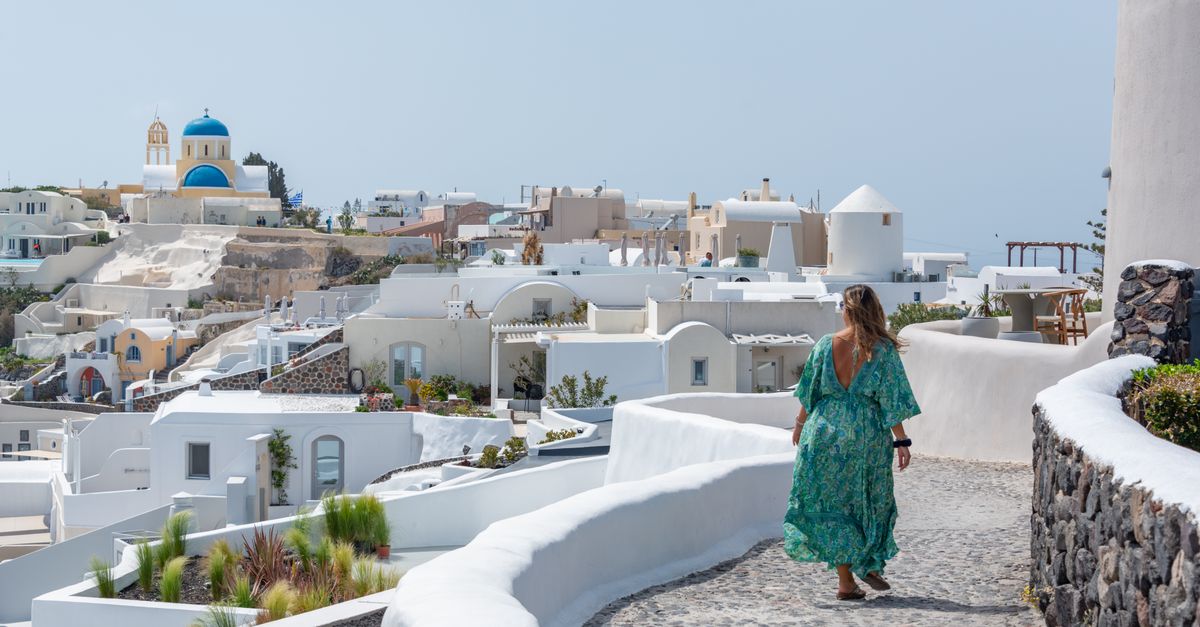
Santorini's caldera-hugging villages and sunset views draw millions annually, but venture beyond Oia and Fira to discover whitewashed chapels, volcanic beaches, family-run tavernas, and local life largely untouched by cruise ships. The island's true character emerges in its quieter corners—places where Cycladic traditions persist and you'll eat better for less.
Pyrgos: The Labyrinthine Heart
Pyrgos sits inland at the island's highest point, a medieval fortress village where narrow lanes wind upward between whitewashed houses. Unlike Oia, it remains genuinely lived-in: locals play cards in the plateia (main square), children chase each other through alleys, and you'll find no organized tour groups. The central square has a small taverna or two with honest prices and cooking that tastes like someone's grandmother is running the kitchen.
The Venetian Castle ruins crown the village—free to explore, with 360-degree island views. The effort of climbing rewards you with perspective: you see Fira clinging to the cliff below, the caldera's expanse, and on clear days, neighbouring islands. Time your visit for late afternoon when light softens and the village empties slightly after lunch. A few family-operated rooms rent above the main square if you want a genuine overnight experience away from hotel zones.
Akrotiri: Minoan Ruins and Red-Sand Beaches
South Santorini's Akrotiri rewards both archaeology enthusiasts and beach lovers. The Akrotiri Archaeological Site contains a preserved Minoan settlement dating to 1600 BCE—streets, workshops, pottery, even preserved food vessels. A modern protective structure keeps the site accessible in summer heat. Admission charges apply (roughly €10–12 USD equivalent), and morning visits beat afternoon crowds. Audio guides aren't always available, but the site's layout is intuitive; spend 1–1.5 hours exploring.
Below the excavation, Kokkini Beach (Red Beach) offers rust-coloured sand formed by volcanic activity—unusual and photogenic, with tavernas at the water's edge. The beach is compact and popular, but arrive early (before 10 a.m.) or late afternoon for breathing room. Swimming is safe; water clarity is excellent. Combine archaeology with lunch: eat fresh fish at one of the beachfront spots while watching the caldera's opposite wall.
Kamari and Perivolos: East Coast Escape
The east coast faces the Aegean rather than the caldera—calmer, less dramatic, and far quieter. Kamari and Perivolos stretch along a long, dark-sand beach with shallow water perfect for families. Hotel tourism exists here, but it's lower-key: local families still swim alongside visitors, and the vibe is genuinely Greek rather than curated for Instagram.
Kamari has a functioning village feel—a small supermarket, a hardware shop, local restaurants where the owner's wife cooks. Perivolos bleeds into it seamlessly. Walk the beach at sunset; the sun drops toward mainland Greece rather than the sea, but the light is warm and the crowd is minimal. Taverna Thalassa and similar family spots serve uncomplicated food at fair prices. Stay overnight here if you want Santorini without the tourist-village atmosphere—you'll pay 30–40% less for accommodation than caldera-side.
Anafi: A Neighbouring Secret
Technically not Santorini but a short ferry ride (45 minutes from Fira port), Anafi remains one of Greece's least-visited inhabited islands. No cars rent; no package tours operate. You walk, you take local taxis, or you hire a small boat. The island has one village (Chora), perched on a ridge with perhaps fifty year-round residents. In summer, maybe 200 tourists total visit weekly.
Accommodation is basic—family-run rooms, one or two small hotels. There's a single taverna and a shop. The reward: golden-hour light on an empty beach, wild herbs growing between white houses, and a silence broken only by cicadas and goat bells. Come here only if solitude appeals more than amenities. Ferry schedules are limited; plan carefully using the port timetables.
Wine Tasting Beyond the Tourist Loops
Santorini's volcanic soil produces distinctive white wines, and major wineries have tour buses queued outside. Instead, visit smaller producers in the interior plateau—Sigalas and Gavalas are family operations where the owner still works in the cellar. Tasting often costs €5–8 per person, and you'll taste wine made steps away from where grapes grow. No tours, no gift shops selling €50 bottles of substandard white—just honest producers selling their own.
Ask your accommodation's owner for directions; locals know which wineries prefer unexpected visitors. The best time is late morning, before the heat peaks and before organized groups arrive at larger estates.
Practical Tips for Off-Path Santorini
Timing: Visit April–May or September–October for warmth without July–August crowds and heat. If you come in peak season, explore villages between 7–9 a.m. or after 6 p.m.
Transport: Rent a scooter or small car if comfortable; buses exist but are infrequent to quieter spots. Taxis are reliable but pricey for day trips.
Budgeting:Eat where locals eat—family tavernas in Pyrgos, Kamari, or Perivolos cost €8–15 for a generous main, versus €25–40 in Oia. Wine and coffee are cheaper everywhere except the caldera rim.
Language: English is spoken in tourist areas but less common in village tavernas. Learn "thank you" (efharisto) and "delicious" (nostimo)—both open doors.
Santorini's fame rests on the caldera: the cliffs, the churches, the sunsets. These views are spectacular and worth experiencing. But the island's depth—its agrarian heritage, volcanic geology, culinary traditions—lives in quieter places. Walking Pyrgos's medieval lanes, swimming at Kamari, tasting wine from a family vineyard: these moments reveal the Santorini that existed before tourism and will persist after tour groups depart for their next destination.
The hidden gems require slightly more effort to reach—no cable cars, no organized pickups. But that friction is the point. It keeps spaces real. Go early, go late, go in shoulder seasons, and you'll find the Santorini that surprised earlier travellers, before the island became a brand.
FAQ
Is it safe to rent a scooter in Santorini?
Scooters are popular but come with real risks: narrow roads, steep grades, gravel shoulders, and unfamiliar traffic patterns. Wear a helmet, ride slowly, and avoid evening travel when fatigue sets in. If you're not confident, use taxis or buses instead—cost is reasonable and stress-free.
Can I visit Akrotiri and Pyrgos in one day?
Yes, easily. Akrotiri (south) and Pyrgos (central-south) are roughly 15–20 minutes apart by scooter or car. Spend 1.5 hours at the archaeological site and 1–2 hours in Pyrgos, then add a beach sunset. Budget 5–6 hours total for a relaxed pace with lunch.
No. The island is small (about 73 square kilometers) and well-signposted. A map (digital or paper), basic navigational sense, and local advice from your accommodation owner are sufficient. Many prefer self-directed exploration to the constraints and cost of group tours.
Which hidden gem is best for families with young children?
Kamari or Perivolos are ideal: long, shallow-water beaches, calm Aegean conditions, family tavernas, and a relaxed pace. Pyrgos is safe and walkable but has stairs and narrow passages that challenge toddlers. Akrotiri requires good sun protection and is better for children aged 7+.