If you're torn between these two Mediterranean capitals, the honest answer is: they're both worth visiting, but for different reasons. Athens is your choice for ancient Greece, outdoor life, and a more relaxed Mediterranean pace, while Rome offers layer upon layer of history spanning 2,500 years and some of Europe's finest art. Choose Athens if you want to feel like you're walking through Plato's world; choose Rome if you want to walk through centuries all at once.
What Makes Athens Different
Athens is the birthplace of Western civilization in a way Rome simply isn't. While Rome was building an empire, Athens was inventing democracy, philosophy, and theatre. The Acropolis and its Parthenon stand as the single most iconic symbol of ancient Western thought—there's nothing quite like it in Rome, where ruins are more scattered and layered.
The city feels more intimate than Rome, with neighbourhoods like Plaka that actually feel lived-in rather than museumified. You'll find yourself sitting in a taverna at midnight eating saganaki (fried cheese) while locals argue about football, not tourists. The pace is slower, the food culture is strong but unpretentious, and the weather is reliably warm even in shoulder seasons.
Athens also costs less. Budget travellers consistently find better value here—meals, accommodation, and even museums are cheaper than their Roman equivalents. A beer in a backpacker bar costs roughly half what you'd pay in central Rome.
Experience it yourself
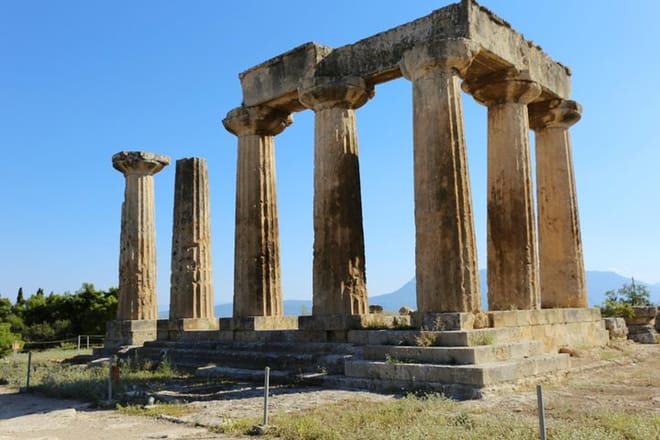
3 Days Private Tour: Kalavrita - Olympia - Mycenae - Epidaurus & Corinth
Rome wins on variety and scale of history. You can walk from Republican-era temples to medieval churches to Renaissance palaces to Baroque fountains—all in one afternoon. Rome layers four distinct historical periods visibly on top of each other.
Athens, by contrast, is dominated by one era: Classical antiquity (roughly 500–300 BCE). The city was occupied, destroyed, and rebuilt many times, but most visible landmarks date to that 200-year golden age. That's not a weakness—it's intensely powerful—but if you want to see history as a continuous narrative, Rome offers more.
For deeper exploration of the broader Greek world, consider a private tour of Corinth, Mycenae, and Nafplio, which takes you to sites from different chapters of Greek history just a day trip from Athens.
Visiting Ease and Atmosphere
Athens is more straightforward to navigate. The metro is cleaner and more intuitive than Rome's, the historic centre is compact, and you won't need a car. Rome requires more planning: pickpockets are worse, distances are greater, and getting lost happens faster.
The crowds differ too. Both cities are busy, but Rome's crowds feel relentless—the Trevi Fountain and Colosseum are genuinely overwhelming in peak season. Athens's main sites (the Acropolis, the Parthenon) draw crowds, but Plaka and the Panathenaic Stadium feel refreshingly manageable. You can actually stand in front of the Parthenon without being swept along by a human tide.
For first-time visitors wanting to see the essentials efficiently, a Best of Athens Fast Tour covers the major sites in a single morning, leaving you time to explore neighbourhoods at your own pace.
Art and Museums
Rome has world-class art, but much of it is in churches and private collections scattered across the city. The Vatican Museums are extraordinary but exhausting—most people run out of energy before they've seen half of it.
Athens concentrates its art in fewer, more manageable spaces. The Acropolis Museum is one of Europe's best-designed museums: it's modern, not overwhelming, and the collection is coherent rather than encyclopedic. The National Archaeological Museum is excellent but less famous than its contents deserve.
If you're an art enthusiast planning 5+ days, you want Rome. If you're looking for ancient art and artefacts specifically, Athens is cleaner and more focused.
Food and Lifestyle
Both cities eat well, but the rhythm is different. Rome's food scene is touristy in the centre; you have to hunt for authentic trattorias. Athens's food is more uniformly good because the entire city—not just tourist zones—runs on proper tavernas and mezze bars.
Greek food also travels better on a budget. A plate of grilled octopus or lamb keftedes with feta and olives costs €8–12 and is genuinely delicious. Roman pasta dishes are cheaper in raw cost but feel less generous.
The lifestyle is more relaxed. Romans rush; Athenians linger. If you want to sit for hours with a coffee and a book, or a wine and friends, Athens is built for that. Rome is built for ticking boxes.
Rome is more temperate year-round, though winter can be surprisingly rainy and cold. If you're visiting in July or August and can't handle extreme heat, reconsider Athens unless you plan to spend afternoons in museums and cafés.
How Long to Spend
Most visitors need 3–4 days in Athens to see the main sites and enjoy the city properly. You can do it in 2, but you'll feel rushed. Rome typically requires 4–5 days to see major highlights without exhaustion.
If you want to go deeper into Greek antiquity, consider extending your trip with a 10-day Peloponnese tour, which visits classical sites across southern Greece.
Budget Comparison
Athens is genuinely cheaper than Rome. Budget €40–60/night for decent accommodation, €5–10 for meals, and €12–14 for major museum entries. Rome runs €60–90/night, €10–15 for meals, and €15–20+ for attractions. Over a week, the difference can be €200–400.
The Verdict
Choose Athens if you:
Want to focus on ancient history and philosophy
Prefer a relaxed pace and outdoor living
Have a tighter budget
Like smaller, more walkable cities
Enjoy Mediterranean food culture over Renaissance art
Choose Rome if you:
Want to see multiple eras of history layered together
Prioritize world-class art and museums
Prefer cooler weather
Like the energy and formality of a major capital
Have limited time and want maximum variety
Ideally, visit both. If forced to choose one, Athens rewards slower travel and works better on a budget. Explore things to do in Athens to start planning your trip.
FAQ
Is Athens or Rome better for first-time visitors?
Rome is slightly better for first-time visitors because it has more variety—ancient ruins, Renaissance art, Vatican treasures, and Baroque fountains—all in one trip. Athens is better if you specifically want deep immersion in ancient Greece. Both are excellent; Rome edges ahead purely for variety.
Can you visit both Athens and Rome in one trip?
Yes. A 10–12 day trip allows 4–5 days in each city with flights between them. The flight takes about 2 hours, and it's usually €30–80 each way with budget airlines. Many travellers combine them with southern Italy (Naples, Pompeii) or the Amalfi Coast for a 2-week Mediterranean loop.
Which city is safer?
Both are generally safe for tourists. Rome has higher pickpocketing rates in crowded areas (metro, Trevi Fountain, Colosseum). Athens is slightly safer from theft but requires normal street smarts. Both require the same precautions as any major European city.
Is Athens worth visiting if I'm not interested in ancient history?
Yes. The city has excellent food, vibrant neighbourhoods (Exarchia, Gazi), nightlife, design shops, and a relaxed lifestyle. You don't need to be a history buff to enjoy Athens as a Mediterranean city. That said, if ancient history doesn't interest you at all, Rome or Barcelona might suit you better.